Natural gas pipelines run throughout your community in residential, commercial and even rural areas. The National Transportation Safety Board says pipelines that bring natural gas to homes and businesses are the safest method of transportation for natural gas.
How natural gas reaches your home
Natural gas comes from the earth. It travels to your community through underground transmission pipelines.
Once the natural gas reaches your community, it passes through a gate station. Here, the local distribution company, such as Alliant Energy, reduces the pipeline pressure and distributes the gas to customers.
The underground pipelines within your community are called “mains” and are typically buried under or along streets. From there, a smaller service line brings the gas to your meter. Service lines are buried in yards.
After the gas passes through a meter, it belongs to the customer. Customers are responsible for installing and maintaining the piping that natural gas flows through to reach appliances and equipment.
Pipeline markers
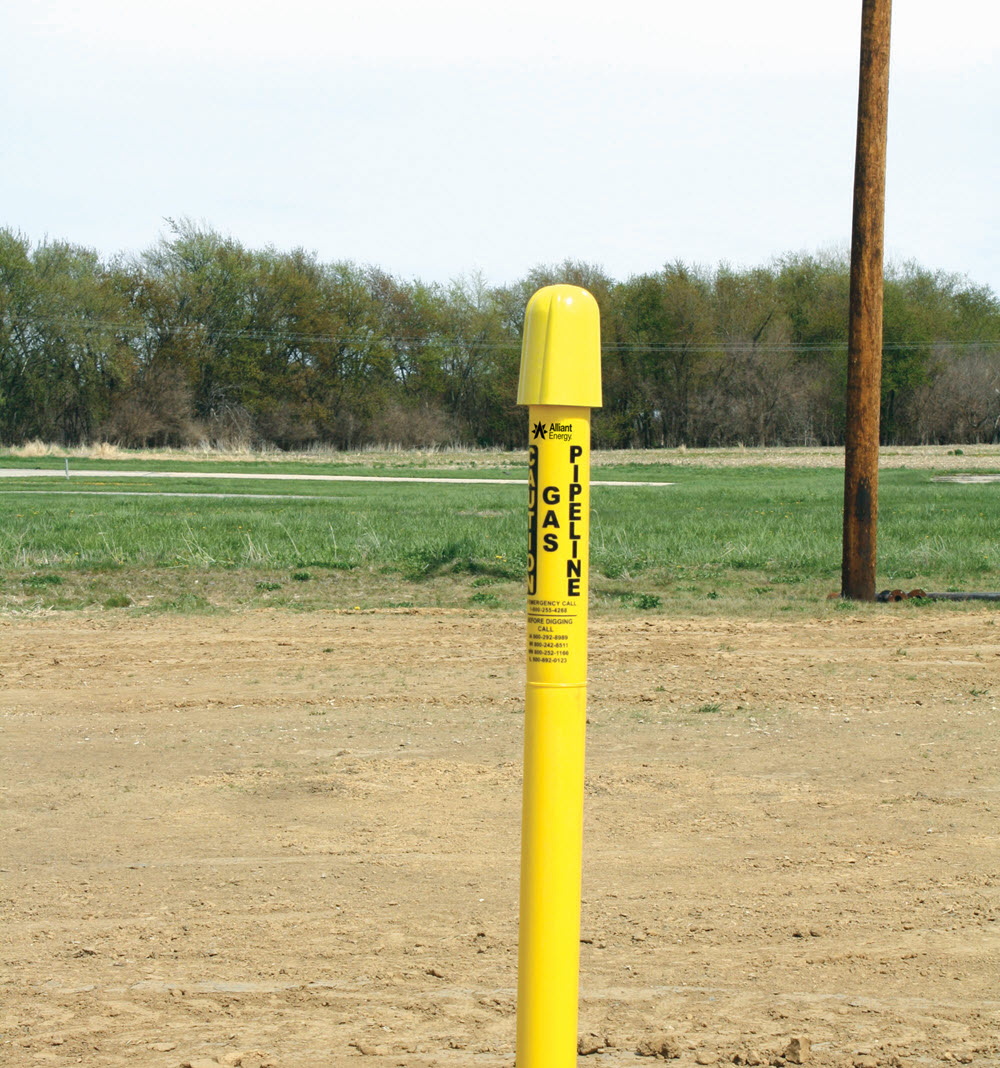
Utility companies use markers to show approximately where transmission pipelines run underground. Pipeline markers are typically placed at public road crossings, fence lines and street intersections.
Color and format vary, but all markers provide the pipeline content, operator name and contact phone number. In most cases, pipeline markers are not located on a natural gas distribution system inside urban service territories.
Visit the National Pipeline Mapping System at npms.phmsa.dot.gov to learn who operates pipelines in your area.
To learn about our integrity management program or other natural gas pipeline safety topics, call 1-800-ALLIANT (800-255-4268) or visit alliantenergy.com/pipelinesafety.