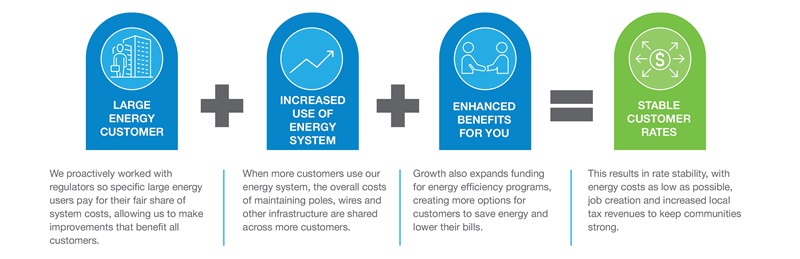
Data centers don’t automatically raise electric bills. The best way to ensure that doesn't happen is for new large energy users to pay for the costs they create.
Based on findings from the Brattle Group (June 2026)*


Based on findings from the Brattle Group (June 2026)*
When a data center arrives, it requires energy.
We ensure data centers will pay for the power and equipment they need, so you don’t have to.
A specific data center rate ensures they pay for their own equipment and power, so those costs don’t end up on your bill.
These rates include long-term financial commitments that cover costs upfront and protect you, even if the data center leaves.
Processes exist to ensure our decisions always put customers first. Independent research shows with proper planning, data center projects will not drive up residential electric rates.
In many cases, adding a large energy use customer helps share the grid’s fixed costs, which keeps costs effective for everyone.
Any new grid equipment paid for by data center projects creates a stronger, more modern grid, while the new data center customer picks up the tab.

Video: The Truth about Data Centers

Video: Cedar Rapids Economic Alliance discusses growth at Big Cedar Industrial Center
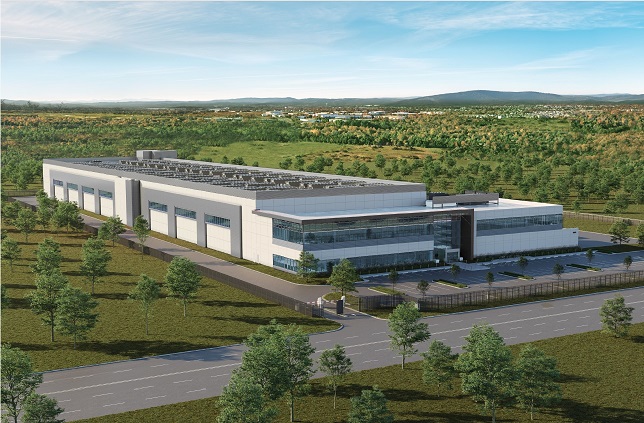
QTS announced its Cedar Rapids data center campus in January 2025. It will be located on 612 acres of the Big Cedar Industrial Center. The planned $10 billion investment is the largest economic development investment in the state of Iowa and city of Cedar Rapids' history.
Community and economic impact: QTS will contribute up to $18 million over 20 years to the City of Cedar Rapids-owned “Community Betterment Fund” following the first phase of construction.
“QTS’s arrival underscores Cedar Rapids’ momentum as a center for growth and opportunity,” said Cedar Rapids Mayor Tiffany O’Donnell. “With a multi-million-dollar commitment to our community betterment fund, this investment brings high-quality jobs, drives economic progress, and strengthens our local initiatives and nonprofits.”
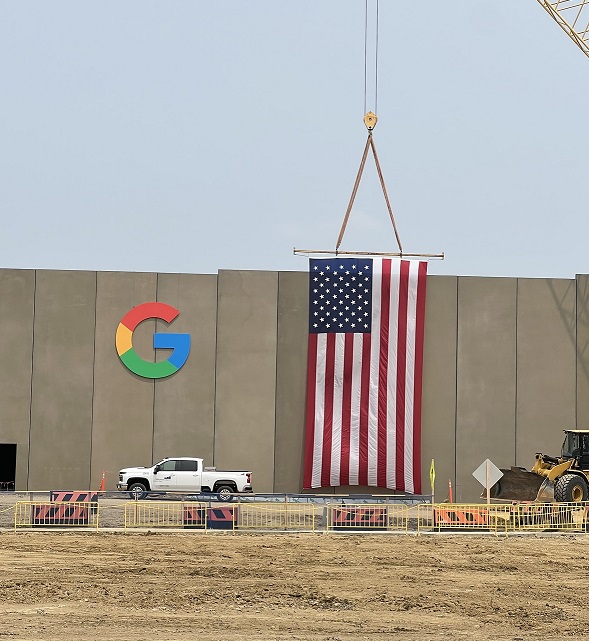
In May 2025, Google announced a data center project at the Big Cedar Industrial Park in Cedar Rapids, Iowa.
Community and economic impact: Google is investing an additional $7 billion in Iowa within the next two years in cloud and AI infrastructure, as well as in expanded workforce development programs. This builds upon investments the company has made in the state since 2007.
Google, along with electrical training ALLIANCE (etA), is also providing funding to support an innovative program to help increase the electrical workforce pipeline in Iowa by 95%. This will help develop the labor force needed to build new energy infrastructure.

Meta announced its $1 billion data center investment in Beaver Dam, Wisconsin, in November 2025. The project will be built in Alliant Energy’s Beaver Dam Commerce Park.
Community and economic impact: Over the next decade, Meta will donate $15 million to Alliant Energy’s Hometown Care Energy Fund. Meta will also underwrite nearly $200 million in energy network improvements, substations and transmission lines to support the project. The site’s electricity use will be matched with 100% clean and renewable energy.
"This investment will help ensure Wisconsin is meeting the demands of the 21st Century and creating good, family-supporting jobs to support the workforce in the Beaver Dam community and across the greater region," said Wisconsin Governor Tony Evers.
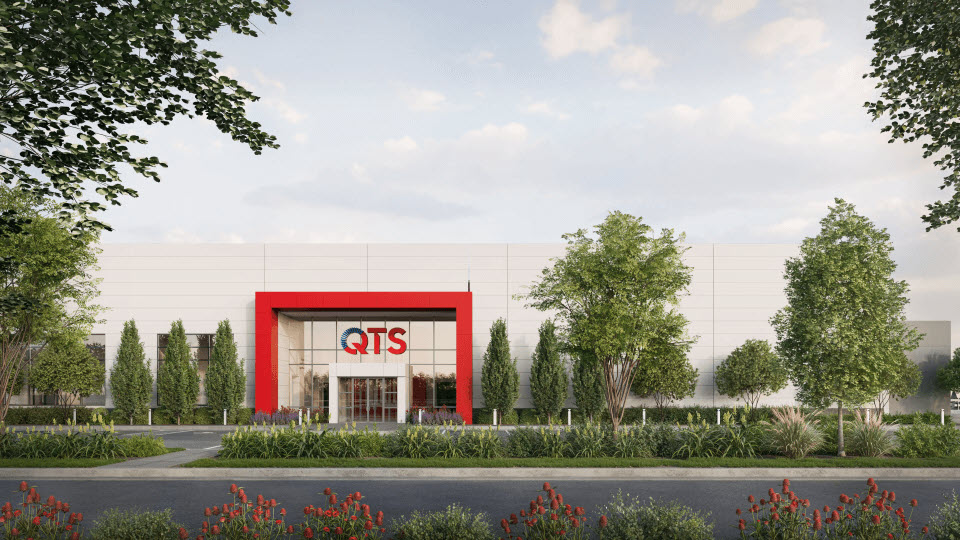
QTS is exploring plans for a potential data center campus in Clinton, Iowa.
Community and economic impact: If approved, the proposed campus would represent a multibillion-dollar investment in the region, supporting thousands of construction jobs and creating hundreds of long-term careers, while also contributing to projects and initiatives that matter most locally.